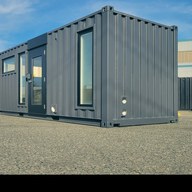
Quick answer
Act 313 of 2025 requires Arkansas cities and towns to allow at least one accessory dwelling unit (ADU) by right on a lot that has a single-family home. Local rules that conflict with it are invalid from January 1, 2026. A container cabin can be that ADU only if it meets the building code, local zoning and the size limit: no more than 75% of the main house's floor area or 1,000 sq ft, whichever is less. The law doesn't apply on unincorporated county land, and private HOA covenants can still say no.
This guide is general information, not legal advice. Rules change; confirm with your city or county before you build.
What Act 313 of 2025 says
House Bill 1503 became Act 313 of 2025 when it was approved on March 18, 2025. It adds a new section to the Arkansas Code (§ 14-56-205) and applies to municipalities, meaning cities and towns. You can read the full text in the official Act 313 PDF from the Arkansas State Legislature (opens in a new tab).
At least one ADU by right
A city must allow at least one ADU by right on a lot with a single-family home. By right means no public hearing, variance or conditional-use permit. The city may only check that your site plan meets its rules. The ADU can be attached to the house, detached, or internal (inside the house).
The size limit
An attached or detached ADU can't be more than 75% of the main house's gross floor area or 1,000 sq ft, whichever is less. Next to an 800 sq ft house, that is 600 sq ft. Next to a 2,000 sq ft house, it is 1,000 sq ft. A single 20ft container has about 150 sq ft of floor space and a 40ft about 300 sq ft, so one container is usually well under the limit.
What cities can't require
- Extra parking, or fees instead of parking
- An ADU that matches the house's exterior design, roof pitch or materials
- That the owner lives in the house or the ADU
- That the people in the two units are family or work together
- Development impact fees of more than $250
- Street or sidewalk improvements, except repairing damage the construction causes
- Stricter height, setback, lot size, lot coverage or frontage rules than for the main house
- Other development standards more onerous than the law allows
- A city-imposed restrictive covenant on the ADU
- Separate water and sewer from the main house
What cities still can do
- Regulate short-term rentals
- Charge an application fee. Application fees are capped at $250 per ADU by the law, plus the city's usual building fees.
- Require will-serve letters from the city's water and sewer systems, or Department of Health approval where there is no city water or sewer
The January 1, 2026 date
Any city policy, regulation or ordinance in effect on or after January 1, 2026 that conflicts with the law is invalid to the extent of the conflict. If your city's rules haven't been updated, ask the planning office how it is applying the law.
What the law doesn't change
- Building code and zoning still apply. The law doesn't override the Arkansas Fire Prevention Code adopted by the State Fire Marshal, local ordinances, zoning, design standards or other state and local laws.
- It covers cities, not counties. On unincorporated county land, Act 313 doesn't apply. Ask the county what it requires.
- HOA covenants still count. Restrictive covenants between private parties, such as HOA rules and deed restrictions, are still allowed.
- Short-term rental rules are allowed. Your city can still limit or license short-term rentals.
- Nothing specific about containers. The law doesn't mention shipping container, manufactured or modular units. A container ADU must still meet the building code like any other dwelling.
Permits a container cabin usually needs
Every place is different, but a container cabin or ADU that people sleep in usually involves these steps. The official pages below are a starting point; check with the agency for current forms and steps.
- Zoning or site plan approval from your city's planning office, or the county where it has zoning. Under Act 313, a city reviews an ADU's site plan rather than holding a hearing.
- A building permit from the local building official, where one is issued. Ask which edition of the Arkansas Fire Prevention Code they enforce and what foundation and anchoring details they want to see for a container.
- Electrical work by a licensed electrician, with inspection. Arkansas licenses electricians through the Department of Labor and Licensing: Electrical Inspection and Licensing (opens in a new tab). Rules on homeowner permits vary by city, so check with the agency and your city.
- Septic approval through the Arkansas Department of Health where there is no city sewer, usually handled by the local county health unit: ADH Onsite Wastewater program (opens in a new tab). Check with the agency for the current application and process.
- A floodplain check. If the site is in a mapped flood zone, you'll likely need a floodplain development permit from the local floodplain administrator before you build. Look up your address on the FEMA Flood Map Service Center (opens in a new tab), and see the Arkansas Department of Agriculture floodplain management FAQ (opens in a new tab). Check with the agency for your parcel.
Marion and Crittenden County
For a lot inside Marion city limits, contact the City of Marion's planning or community development office. For a rural lot outside city limits, contact Crittenden County. Not sure which applies? Your property tax record or the county assessor can tell you whether the parcel is inside city limits.
Planning tips
- Confirm who governs the parcel first. Inside a city, Act 313 and the city's rules apply. Outside, the county's rules apply.
- Check zoning and covenants before you order. Setbacks, utility requirements and HOA or deed covenants can still limit where a cabin goes.
- Start septic early if there's no sewer. Soil conditions can decide whether, where and what kind of system is possible, so settle that before you fix the cabin's spot.
- Check the flood map. A flood zone can affect the permit and how high the floor needs to be.
- Ask about the foundation and tie-downs. A unit people live in generally needs a permanent, code-compliant foundation. Ask your building official what they expect for a container.
- Plan for Arkansas humidity. Steel walls can sweat when warm, humid air meets cool steel, and trapped moisture can lead to mold. Continuous insulation, a well-sealed air barrier, and air conditioning or a dehumidifier all help. Many building-science guides suggest keeping indoor humidity below about 50%. Where a vapor barrier goes depends on the climate, and cold-climate advice may not suit Arkansas, so ask your designer or code official.
- Use licensed trades and get inspections. Keep permits, inspection sign-offs and septic approvals on file. Lenders, insurers and future buyers may ask for them.
How we can help
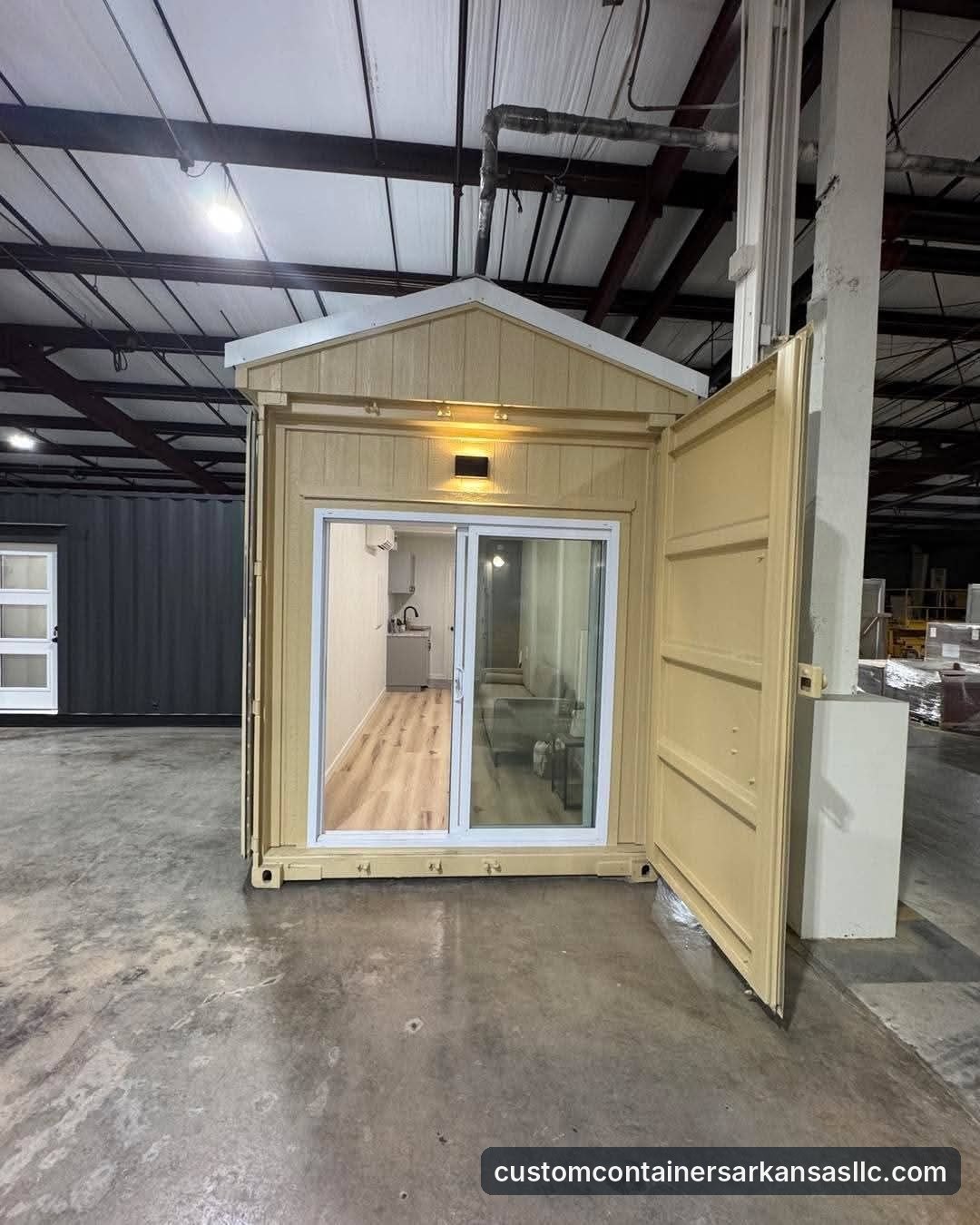
We build the custom camper / tiny cabin in a steel container at our yard in Marion, Arkansas: pitched roof, porch light, sliding glass door, insulation and a finished interior, with options such as windows, heating and cooling, power or a kitchenette. Some electrical hookups may need a local licensed electrician to connect power on site. For a workspace rather than a sleeping space, see the finished studios below.
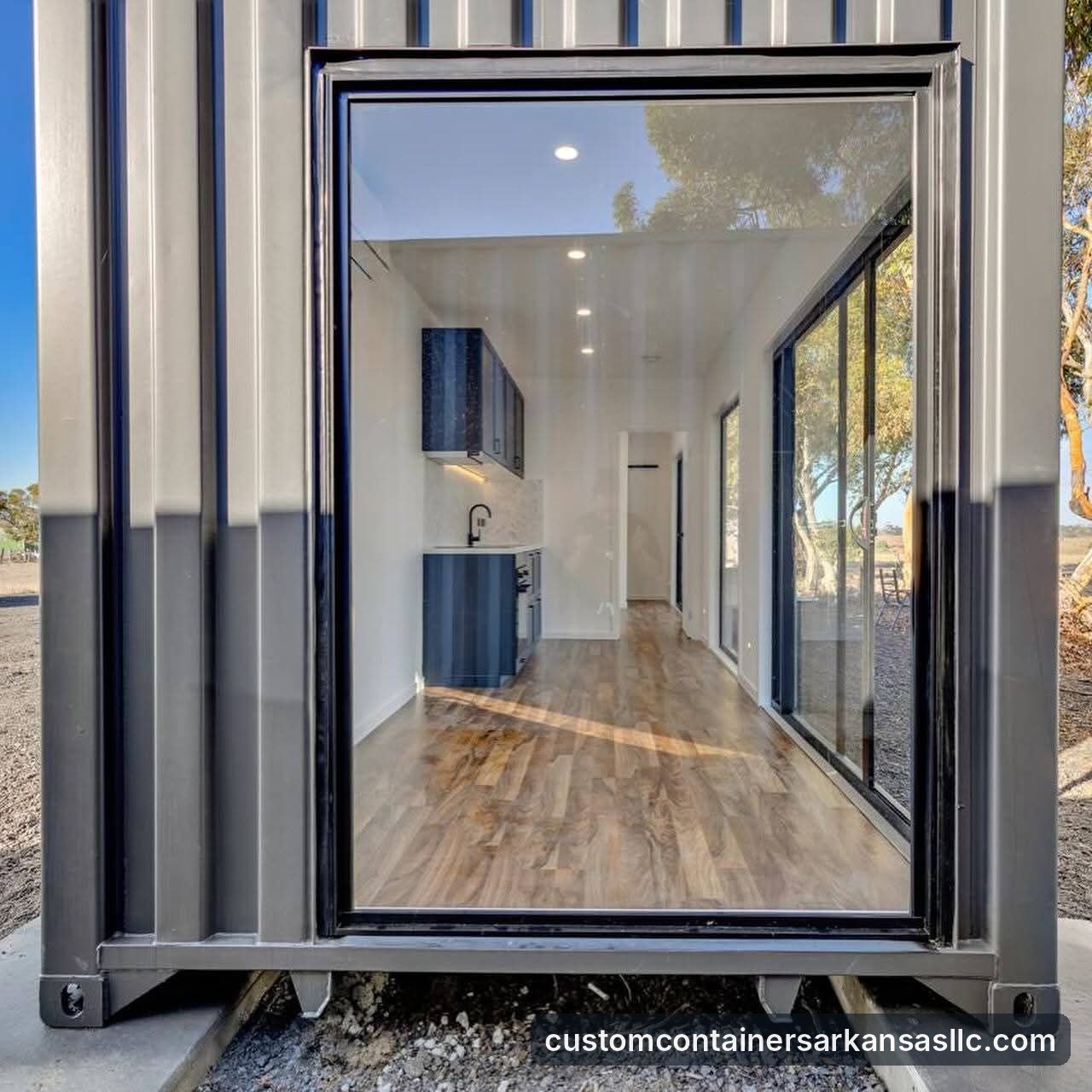
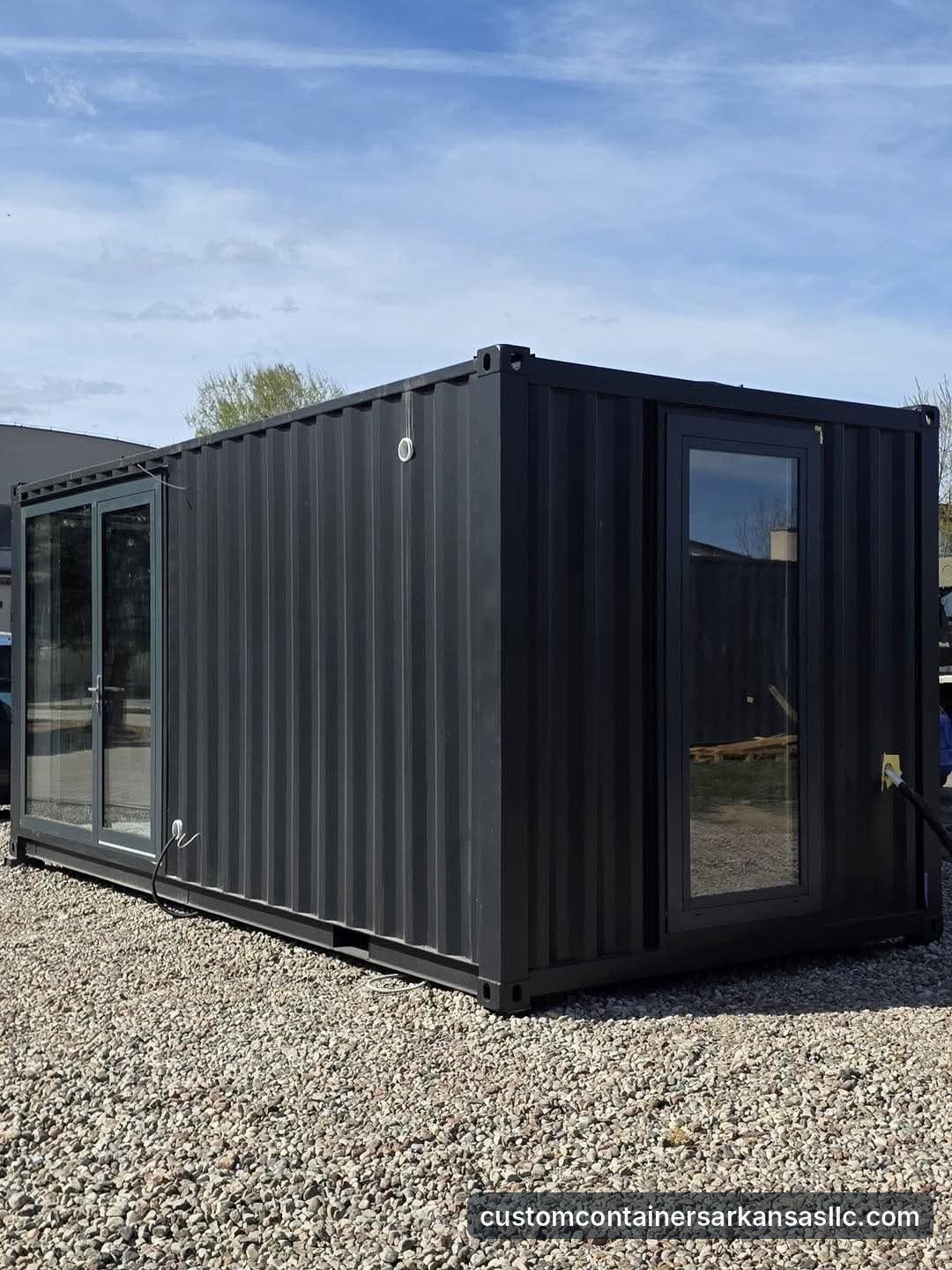
Not sure which size fits your lot and the size limit? Compare them in our 20ft vs 40ft container guide, and use the delivery site-prep checklist to get the spot ready. When you apply for permits, we can send dimensions, specs and photos of the unit. Every quote includes delivery and sales tax.
Frequently asked questions
Can I put a shipping container ADU in my back yard in Arkansas?
If your lot is inside a city or town and has a single-family home, Act 313 of 2025 says the city must allow at least one accessory dwelling unit (ADU) by right. The law doesn't mention shipping containers, so a container ADU still has to meet the building code and the city's other rules. Ask your city's planning office before you order.
How big can an ADU be under Act 313?
An attached or detached ADU can't be more than 75% of the main house's gross floor area or 1,000 sq ft, whichever is less. For example, next to an 800 sq ft house the limit is 600 sq ft. A 20ft container has about 150 sq ft of floor space and a 40ft about 300 sq ft.
Does Act 313 apply outside city limits?
No. The law applies to municipalities (cities and towns). On unincorporated county land it doesn't apply, so ask the county what it requires. Health department septic approval, licensed electrical work and flood-zone rules can still apply there.
Can my HOA still ban an ADU?
Possibly. A city can't require its own restrictive covenant on an ADU, but the law still allows restrictive covenants between private parties, such as HOA covenants and deed restrictions. Read your covenants before you order.
Do I have to live on the property to have an ADU?
Under Act 313, a city can't require the owner to live in either the main house or the ADU, and it can't require the people living in the two units to be related or work together.
Can I rent a container ADU as a short-term rental?
Check your city's rules first. Act 313 says cities can still regulate short-term rentals, so some cities may limit or license them.
Can you get the permits for me?
Permits are the property owner's responsibility. We can send dimensions, specs and photos of the unit you're considering to include with your application.
Disclaimer
This guide is general information, not legal advice. Rules change; confirm with your city or county before you build.
Last reviewed: