Custom Containers Arkansas LLC · customcontainersarkansasllc.com/container-delivery-checklist · (870) 384-8454 · info@customcontainersarkansasllc.com
How to use this checklist
Work through this list a week or two before your container arrives. Tick the boxes on screen, or print it and walk your property with it. The usual snags are soft ground, a gate that is too narrow, and wires or branches overhead.
Figures marked typically are general guides for the tilt-bed and rollback trucks used to deliver containers. The truck, the container size and your site all change them, so ask us for your site. Not sure which size fits? See our 20ft vs 40ft container guide.
1 Before you order
Container rules are set mostly by your city or county, and an HOA can add its own. Call your local zoning or planning office before you order and keep any approval in writing. Our container permits by state guide lists what to ask.
Mark where the container will sit. Each cargo door is about 4 ft wide, so leave at least that much clear space in front of the doors to swing them fully open.
Decide which way the doors should face once the container is down: toward the driveway, the house or your work area. Door direction depends on how the container is loaded on the truck, so tell us when you order. It is hard to turn a container once it is down.
Send photos or a short video of the spot, the driveway or road in, any gate, and anything overhead. Take one from the road looking in and one from the spot looking back out. Email them to info@customcontainersarkansasllc.com or text them to (870) 384-8454 with your delivery address.
2 The ground
A loaded truck and a steel container are heavy. Gravel, concrete, asphalt or well-compacted soil work best. Soft lawn, fresh fill or wet clay can rut, or leave the truck stuck.
A level container lets the doors open, close and seal properly. A gentle slope can be made up with blocks. A steep one needs ground work first.
A compacted gravel pad or a concrete slab gives a firm, well-drained base and keeps the steel floor off wet ground. Plain storage usually doesn't need a full foundation. Offices, cabins and other occupied builds may have local foundation rules.
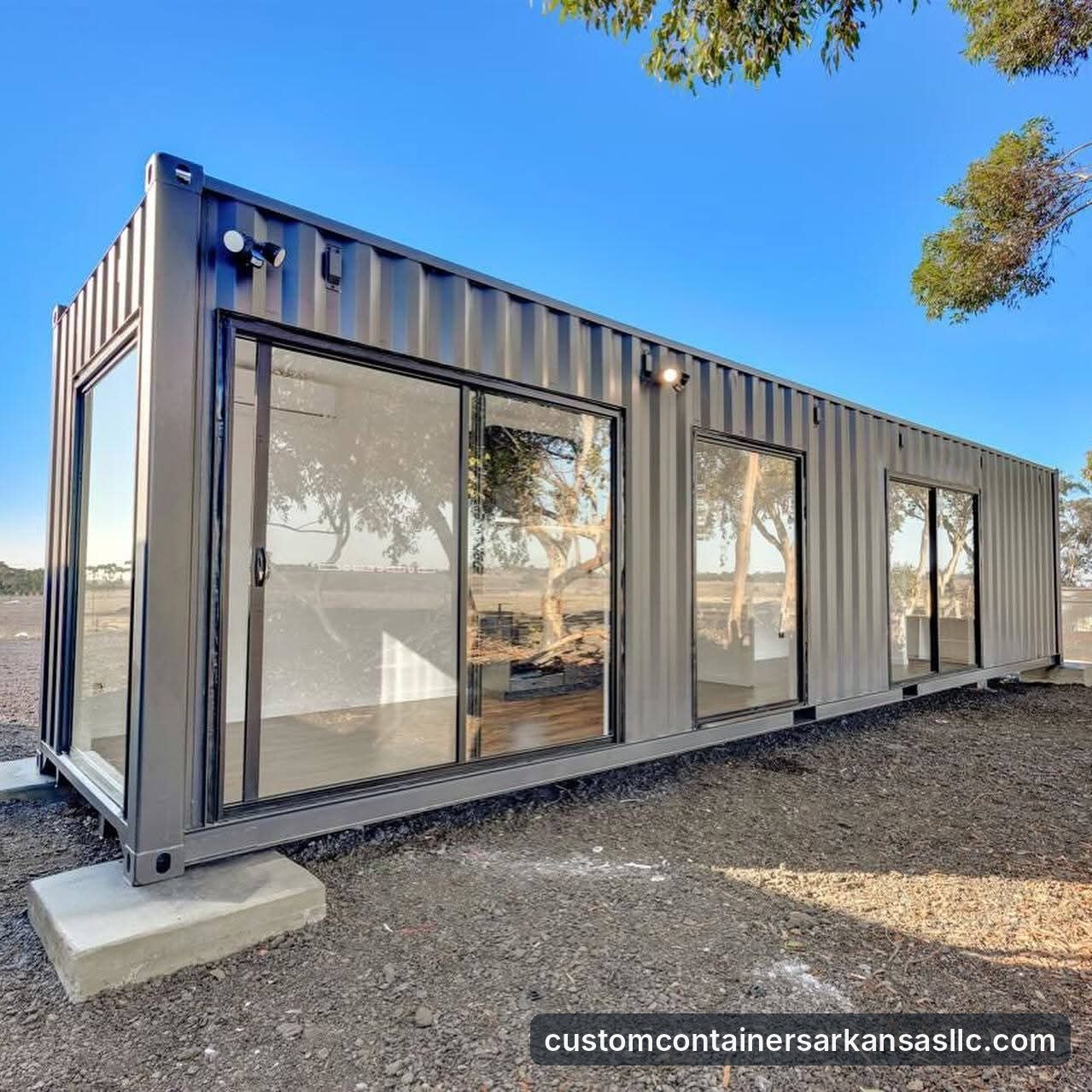
A container's weight rests on its corner castings. Set solid concrete blocks or treated railroad ties where the four corners will land, level with each other, so air can move under the floor. Ask us about extra supports for a 40ft or a modified unit.
3 Truck access
The driveway, gate and any gaps between posts, fences, trees or parked cars typically need about 12 ft of clear width. Gates are the most common snag, so measure yours.
Carports, signs, tree limbs and bridges along the way in typically need 14 ft or more of clearance. A tilt-bed or rollback truck with a container on the back is a tall load.
The truck bed tilts up as the container slides off, so the drop spot needs more room overhead than the driveway. Look straight up above the spot and the stretch in front of it. Trim branches before delivery day. Never move power lines yourself; call your utility if lines are low.
The truck lines up with the spot, tilts its bed and pulls forward as the container slides off, so it needs a straight, level run in line with the spot. That is typically about 60 ft or more for a 20ft container and 100 ft or more for a 40ft, including the truck. Ask us for your site.
The truck must be able to turn in from the road, back up if needed and drive out again. Tight corners, narrow gates off narrow roads, ditches, culverts and soft shoulders can stop a delivery. Keep the truck's route off septic tanks and drain fields.
| Space needed | 20ft container | 40ft container |
|---|---|---|
| Straight run in line with the spot | Typically 60 ft or more | Typically 100 ft or more |
| Clear path width | Typically about 12 ft | Typically about 12 ft |
| Height clearance on the way in | Typically 14 ft or more | Typically 14 ft or more |
| Overhead at the drop spot | More than on the way in, because the bed tilts up | |
4 Utilities and weather
If you will dig for a pad, footings, posts or a trench for power, call 811 before you dig. It is free, and local utilities mark their buried lines. Each state sets how much notice it needs, so call a few working days ahead. Mark private lines, such as septic and water lines, yourself.
Heavy rain can turn a firm spot soft. If the ground or driveway is muddy on delivery day, the truck may not be able to reach the spot safely, and delivery may need to move to a drier day. Tell us if it has rained hard.
5 Delivery day
Have someone there who knows the spot, to show the driver where the container goes and which way the doors face, and to answer questions.
Move vehicles, trailers, equipment and anything else from the path and the spot. Open and unlock gates, and keep children and pets well away from the truck.
Keep your phone on so the driver can reach you on the way.
Your delivery details
- Delivery address and ZIP
- Contact on site and phone
- Container size and type
- Doors should face
- Narrowest gate or gap (ft)
- Notes (wires, slope, soft spots)
Ready? Send your ZIP code, container size and photos of the spot to info@customcontainersarkansasllc.com or (870) 384-8454, or use the form at customcontainersarkansasllc.com/quote. Every quote includes delivery and sales tax.
Next steps
See where we deliver and how delivery is priced on our delivery areas page, check local rules in our permits by state guide, then send an inquiry or order with your ZIP code and photos. We reply within 1 business day with a written quote that includes delivery and sales tax.
Frequently asked questions
How much space does a container delivery truck need?
Typically about 60 ft of straight, level run for a 20ft container and 100 ft or more for a 40ft, a path about 12 ft wide and 14 ft or more of height clearance, with extra room overhead at the drop spot. The exact figures depend on the truck and your site, so send us photos and ask us for your site.
Can a shipping container sit on grass?
On firm, dry, level ground it often can, ideally with blocks or railroad ties under the corners. Soft or wet lawn can rut or trap the truck, and a container on bare soil can settle unevenly over time. Compacted gravel or concrete is a better long-term base.
Do I need to call 811 before container delivery?
If you will dig for a pad, footings, posts or a power trench, yes: call 811 before you dig. It is free. Setting a container on the surface doesn't involve digging, but knowing where buried lines and septic systems are helps keep the truck off them.
Which way will the container doors face?
The way you choose, as long as you tell us before delivery. Door direction depends on how the container is loaded on the truck, and it is hard to change once the container is down.
Do I need to be there on delivery day?
It helps to have someone on site who knows the spot and the door direction. If no one can be there, tell us when you order so we can plan the placement with you ahead of time.
What if it rains before delivery?
Tell us. If the spot or driveway is soft, the truck may not be able to reach it safely, and delivery may need to move to a drier day.
Can I print or share this checklist?
Yes. Use the Print this checklist button or your browser's print option. You are welcome to share it or link to this page.