Shipping container condensation catches a lot of owners off guard the first winter. You open the doors on a cold, clear morning and water is dripping from the ceiling, the walls are wet and the floor has damp spots, even though it hasn't rained in days and the box doesn't leak. That water came from the air inside the container. The good news is that it can be managed with a few simple habits and, if needed, some changes to the box itself.
What "container rain" is and why winter makes it worse
Air always holds some water vapor. Warm air holds more than cold air. When warm, moist air touches a surface colder than its dew point, the vapor turns back into liquid water. A shipping container is a thin steel shell, so its roof and walls cool down fast once the sun goes down. The moisture inside forms on the underside of the roof, runs down the walls and drips onto whatever is stored below. People in the trade call it "container rain."
In general, the Mid-South makes this common in late fall and winter. A mild, humid afternoon loads the air inside with moisture, then a clear night drops the steel temperature quickly. By morning the ceiling is beaded with water.
The weather isn't the only source. Moisture also comes from:
- Wet things loaded inside, such as damp tarps, wet lumber, muddy equipment or freshly cut hay.
- Damp ground under the floor, especially if the container sits directly on dirt or grass.
- Doors opened in rain or fog, which lets humid air in to be trapped once the doors close.
Is it condensation or a leak? A quick test
Before you fix anything, find out which problem you have.
- Leaks show up after rain. They are usually in one spot: under a roof dent where water ponds, at a corner, or along a door seal.
- Condensation shows up on cold, dry mornings, spread across the whole ceiling, and often with no rain in the forecast.
To check for leaks, step inside on a sunny day, have someone close the doors behind you, and give your eyes a minute to adjust. Any pinhole of daylight in the roof, walls or door seals is a place where water can get in. Then look at the door gaskets for tears or flattened sections, and check the roof for dents that hold standing water. If you find no light and no wet spots after rain, condensation is the likely cause.
Five fixes for shipping container condensation, from easiest to biggest job
Keep wet things out and let damp loads dry first
This is the easiest fix, and it makes a real difference. Let tarps, tents, equipment and anything else that came in wet dry in the sun before it goes into the container. One wet load can put more water into the air inside than days of weather. Avoid opening the doors in rain or heavy fog when you can.
Get the floor off wet ground
A container sitting on dirt pulls moisture up from below. A common approach is to set it on blocks, railroad ties or a compacted gravel pad so air can move under the floor and rainwater drains away. If you are still planning where it goes, our container delivery site-prep checklist covers firm, level ground and drainage before the truck arrives.
Add vents for cross-airflow
Most containers have small factory vents, but they often aren't enough for a box full of stored goods. Extra vents let moist air escape before it condenses. A common layout is one vent high on one end and one low on the opposite end, so air moves across the whole box. Keep vents clear of stacked items. We'll cover vent types and placement in more detail in a separate ventilation guide.
Use desiccants, or a dehumidifier where there's power
Desiccants are moisture absorbers, sold as packs, tubs or hanging bags. They work without power and suit storage containers well. Check them every few weeks in winter and replace or recharge them when they fill. If the container has power, a small electric dehumidifier with a drain hose run outside does the same job and needs less checking.
Insulate if people work or sleep inside
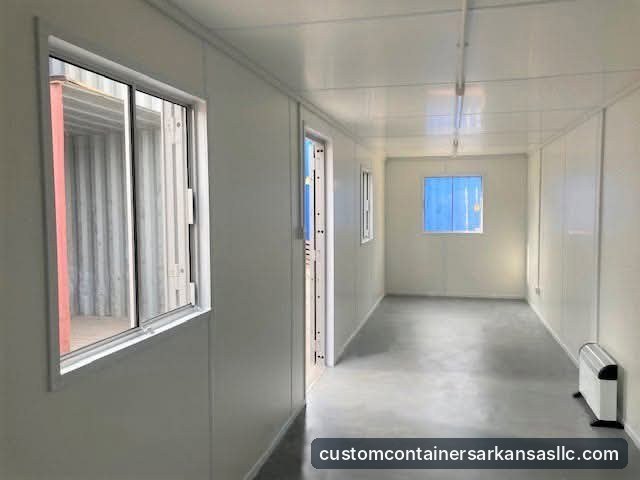
If people use the container as an office, workshop or cabin, insulation is usually worth it. It keeps the inside face of the wall warmer than the dew point, so water doesn't form on it, and it makes heating far more effective. Spray foam and lined wall panels are common choices. The lined walls in the office photo above are one example of covering bare steel. Insulation done wrong can trap moisture behind it, which is why we'll give it its own post later this winter.
What to store, and how, in an unheated container this winter
A few storage habits protect your things even on bad mornings:
- Use pallets. Keep everything off the floor so a little water won't reach it.
- Leave a gap from the walls. A few inches lets air move and keeps items from touching cold, wet steel.
- Cover furniture with breathable covers, such as cotton moving blankets or sheets. Tightly wrapped plastic traps moisture against wood and upholstery.
- Keep paper, fabric and electronics in sealed bins with a desiccant pack inside.
- Never seal the vents shut for winter. It feels like keeping the cold out, but it keeps the moisture in.
A simple winter routine
Once you have the basics in place, a short routine keeps condensation in check:
- After a cold snap, look at the ceiling and corners for water and wipe or air out any wet areas.
- On dry, sunny afternoons, open the doors for an hour or two to let the box air out.
- Check desiccants and replace any that are full.
- Keep a hygrometer inside. It's a small gauge that reads relative humidity, and you can pick one up at most hardware stores.
The EPA's mold guidance recommends keeping indoor relative humidity below 60 percent, and ideally between 30 and 50 percent. A container won't always stay in that range, but if the reading sits well above 60 percent for days, add vents or desiccants before mold has a chance to start.
Build moisture control in from the start
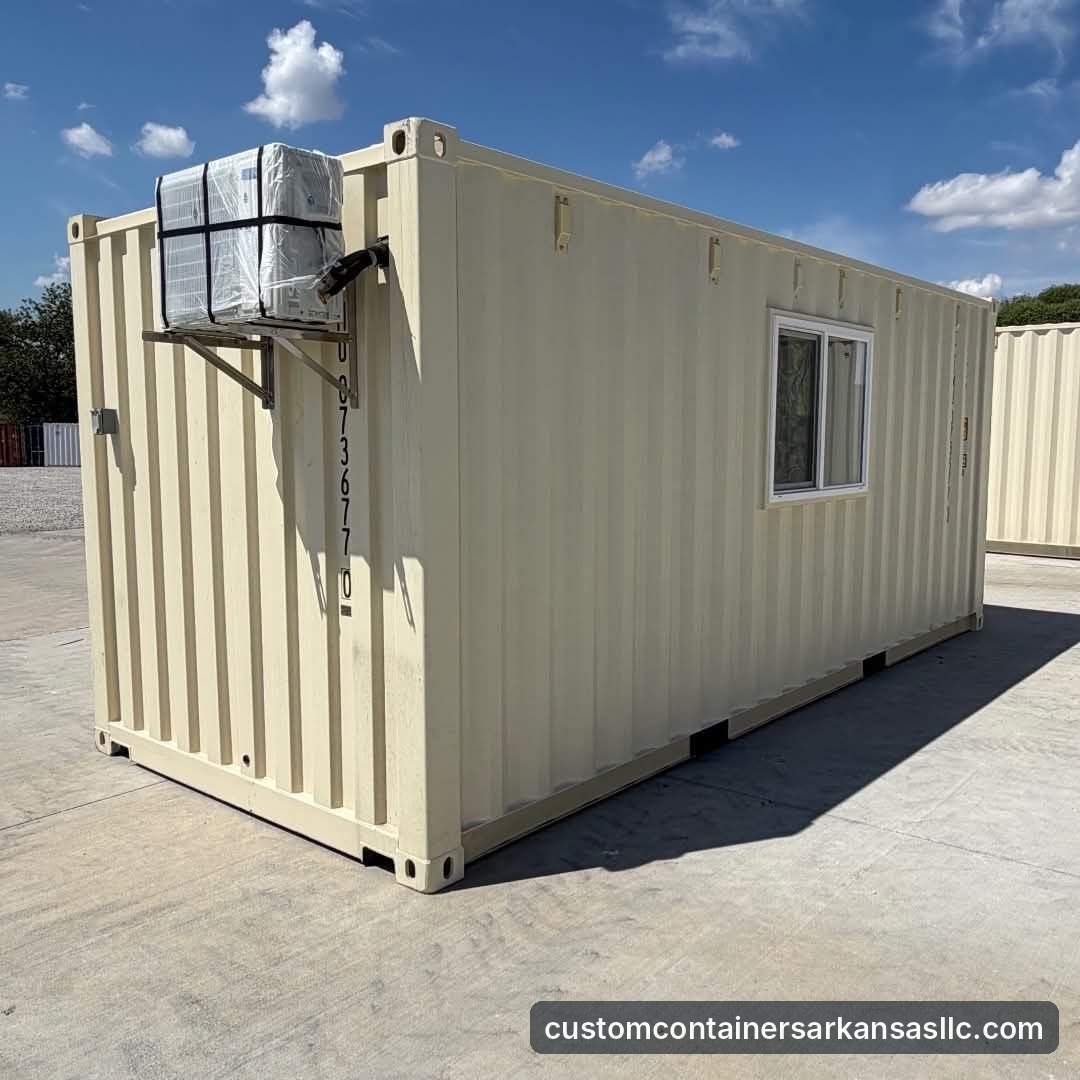
Shipping container condensation is easier to prevent than to chase. If you're ordering a container, you can add vents or insulation before delivery. Custom add-ons are built in our Marion yard before the container ships. Power hookups on site may need a local electrician, so plan for that if you want a dehumidifier or heater.
A container isn't the right fit for everything. Musical instruments, artwork or anything that needs steady temperature and humidity may be better off in climate-controlled storage unless the container is insulated and conditioned.
For more short answers on staying dry, foundations and grades, see our shipping container FAQs. If you're comparing sizes, start with our standard 20ft and 40ft containers.
Ready to plan yours? Tell us what you'll store and your delivery ZIP, and we'll send a written quote that includes delivery and sales tax.
Frequently asked questions
Do new shipping containers get condensation too?
Yes. Condensation comes from moist air meeting cold steel, not from the age of the box. A one-trip container sweats just like a used one if the air inside is damp and the walls get cold.
Should I close the vents in winter?
No. Airflow is what carries moist air out of the container. Sealing the vents traps humidity inside, which usually makes dripping worse on cold mornings.
Will a dehumidifier work without power?
No. An electric dehumidifier needs a steady power supply. Without power, use desiccant packs or hanging desiccant bags and swap or recharge them as they fill.